By Avery Finch, Senior Investigative Correspondent
January 20, 2026
The old nursery rhyme used to be a celebration of abundance, a rhythmic countdown of a well-stocked wall. But in the current economic climate, that wall is looking dangerously thin. Across the United States, the craft beer industry—once the darling of the “buy local” movement—is facing a hangover of epic proportions. We are no longer just taking one down and passing it around; we are witnessing the structural collapse of an industry where the margins are as crisp as a pilsner and twice as fragile.
“It used to be that you could open a taproom with a dream and a funky label,” says Silas Vane, a former brewmaster whose flagship IPA once commanded lines around the block. “Now, the cost of aluminum, CO2, and specialized grain has turned the dream into a debt trap. If you lose just one loyal customer—one ‘bottle on the wall’—the math simply stops working. We aren’t just losing beer; we’re losing the community centers of the 21st century.”
The “99 bottles” problem is a multifaceted crisis. First, there is the saturation of the shelf. With thousands of breweries in operation, the competition for tap handles and refrigerated space is cutthroat. We have already seen the dominoes fall for established names that once seemed invincible. In the past few years, the industry has been rocked by the high-profile bankruptcy filings of pioneers like Anchor Brewing Company, which stunned the Bay Area with its closure, and Metropolitan Brewing in Chicago, which struggled under the weight of rent and overhead. Even regional powerhouses like Flying Fish Brewing in New Jersey and Wild Leap Brew Co. have faced insolvency or forced sales, proving that even “award-winning” status cannot pay the utility bills in a saturated market.
Furthermore, a significant demographic shift is draining the glass from the bottom up. A growing segment of the former craft-loving public is trading the pint glass for the pipe. As marijuana legalization expands and “California sober” becomes a mainstream lifestyle, consumers are increasingly choosing THC over ABV. For many, the appeal of a calorie-free, hangover-less high far outweighs a $9 hazy IPA that leaves them feeling sluggish the next morning. This “cannabis crossover” has left taprooms quiet on Tuesday nights, as the social ritual of “grabbing a beer” is replaced by the more discreet, and often cheaper, consumption of cannabis.
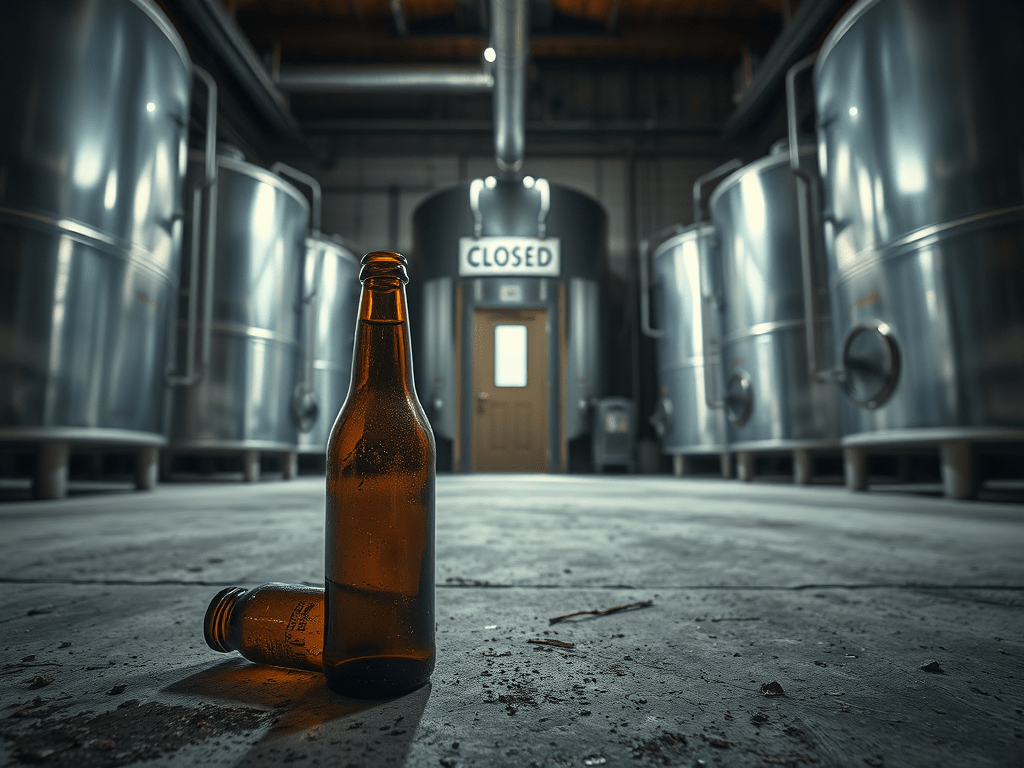
The rise of “sober-curious” lifestyle shifts has left many tanks sitting empty. As the public turns toward non-alcoholic alternatives or cannabis-infused social tonics, the overhead of maintaining massive stainless steel fermenters remains fixed. For many independent brewers, the “wall” isn’t just dropping by one; it’s being demolished by a changing demographic that prefers “dry” or “high” to “draught.”
As we survey the wreckage of abandoned warehouses and shuttered tasting rooms, it’s clear that the industry must adapt or evaporate. The song may still be playing, but for many brewers, the music is about to stop—and there won’t be a single bottle left to pass around.
 Real.Good.News.
Leave a comment