By Julian Sterling, Lead Investigative Correspondent
January 19, 2026
As the global countdown to the February 25 revival intensifies, a strange phenomenon is occurring. A new generation of viewers, armed with the psychological vocabulary of 2026, is binge-watching the original Scrubs and coming to a harrowing conclusion: Sacred Heart Hospital wasn’t a place of healing—it was a brightly lit purgatory of professional gaslighting and dissociative breaks.
While our parents remembered a “zany workplace comedy,” we are seeing something far more unsettling. Here are the ten reasons why Scrubs is the most disturbing artifact of the early 21st century currently haunting our feeds.
1. J.D.’s Chronic Dissociation
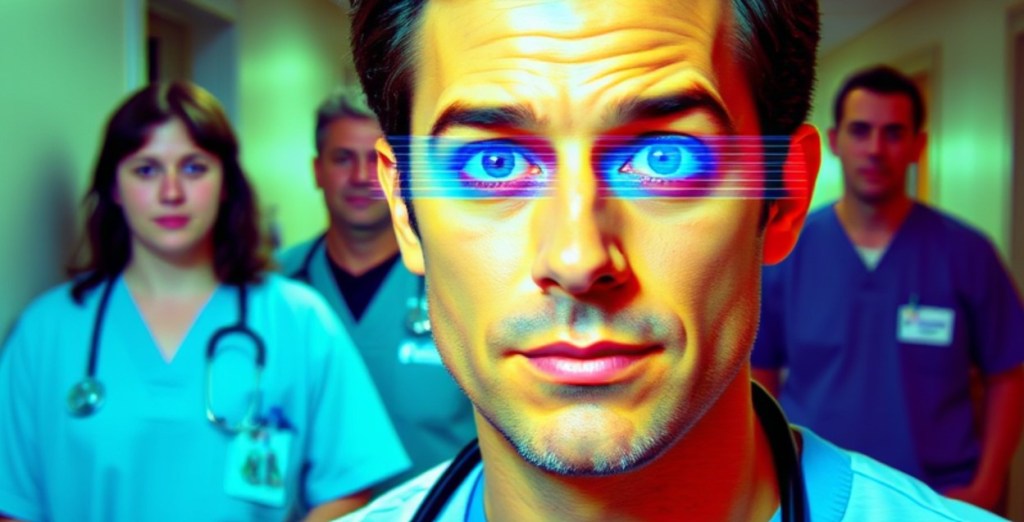
The show’s central conceit—J.D.’s whimsical daydreams—is being re-evaluated by 2026 mental health advocates as a severe dissociative disorder. We are watching a medical professional lose touch with physical reality in the middle of life-saving procedures. Every time J.D. stares blankly into space to imagine a musical number, a patient is potentially flatlining.
2. The Janitor’s Psychological Warfare
In 2026, we don’t see a “quirky rivalry.” We see a workplace stalker who spent eight years systematically dismantling a young doctor’s sanity. The Janitor’s behavior—trapping J.D. in water towers, sabotaging his equipment, and creating elaborate “lies”—is a textbook study in predatory harassment that would trigger a massive HR intervention today.
3. Dr. Cox’s Narcissistic Abuse
The character once celebrated as a “tough-love mentor” is now viewed as a fountain of toxic masculinity and narcissistic abuse. His refusal to use J.D.’s actual name—opting instead for female names to belittle him—is a gender-based psychological tactic designed to strip an individual of their identity.
4. The Infinite Mortality Rate
The sheer volume of deaths at Sacred Heart is staggering when binged back-to-back. The show pioneered the “Whiplash Pivot,” jumping from a fart joke to a terminal diagnosis in six seconds. This constant proximity to death, treated with a laugh track, creates a sense of nihilism that is deeply jarring to the 2026 sensibility.
5. The “God Complex” of Kelso
Dr. Bob Kelso represents the ultimate 2000s villain: the soulless healthcare administrator who views human lives as line items on a spreadsheet. His cheerful admission that he chooses profit over patients’ lives is no longer “dark humor”—it’s a painful reminder of the systemic failures we are still fighting in 2026.
6. The Toxic “Guy Love”
While the bond between J.D. and Turk is often called “pure,” 2026 analysts are pointing out the co-dependency. Their inability to function as independent adults without constant validation from one another creates a claustrophobic social dynamic that frequently sabotages their romantic partners’ emotional well-being.
7. The Ghost of Laverne
The decision to kill off Nurse Laverne, only to bring the actress back as a “new” character named Shirley, is perhaps the show’s most meta-disturbing moment. It suggests that in the world of Sacred Heart, individuals are interchangeable and the trauma of death is easily erased by a simple change in wardrobe.
8. The “Todd” and the Era of Harassment
The character of “The Todd” is a walking lawsuit. In the pre-accountability era of the 2000s, his relentless sexualization of everyone in the building was a “gag.” In 2026, he is a terrifying reminder of the hostile work environments that were once considered “primetime friendly.”
9. The Uncanny “Imagination” Set
There is a sterile, liminal quality to the hospital set. Because it was filmed in a decommissioned real-life medical center (the North Hollywood Medical Center), the show possesses a “haunted” energy. The bright primary colors of the scrubs clashing against the dingy, authentic hospital walls create a visual dissonance that feels like a fever dream.
10. The 2026 Revival Uncertainty
The most disturbing part? We’re going back. The upcoming revival suggests that these characters—now in their 50s—are still trapped in the same cycle of trauma and “imagination.” It’s a loop with no exit, proving that at Sacred Heart, the shift never truly ends.
 Real.Good.News.
Leave a comment