By Julian Sterling, Lead Cultural Correspondent
January 19, 2026
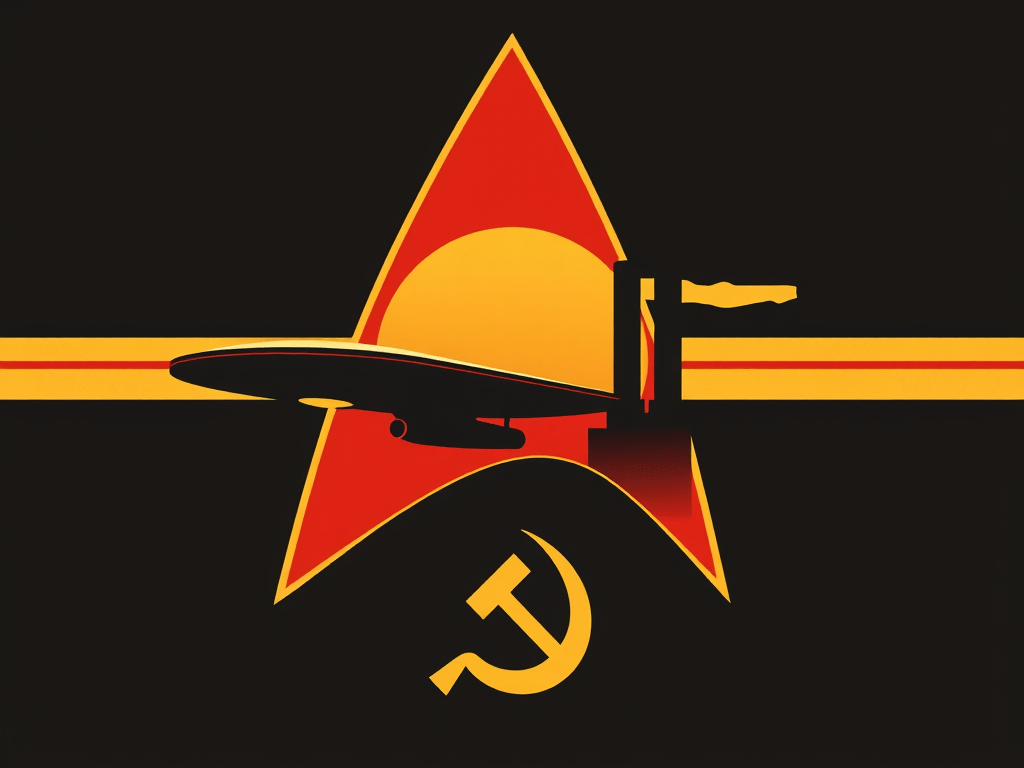
For decades, the hum of the Enterprise warp core has served as the white noise of the American living room. We thought we were watching a thrilling frontier adventure about rugged individualism; in reality, we were being fed a steady diet of collectivist indoctrination designed to make the dismantling of the free market look like “the future.” As we look back from the vantage point of 2026, it is clear that Gene Roddenberry wasn’t just a dreamer—he was a master of the “long game,” carefully installing the cultural hardware for a socialist “Utopia” while we were distracted by the flashing lights of the bridge.
“The genius of the show was its ability to make the loss of personal property feel like an upgrade,” notes Dr. Alistair Vance, a media critic specializing in subversive subtexts. “It didn’t use a hammer; it used a tractor beam to pull us toward a state-managed existence.”
Here are ten subtle ways the Federation turned the “Final Frontier” into a training ground for socialism:
- The Subliminal Death of the Dollar
By the time The Next Generation arrived, the concept of money had been treated as a primitive superstition. Picard’s smug dismissal of “the acquisition of wealth” wasn’t just a character trait; it was a psychological operation to make viewers feel guilty for wanting a healthy 401(k). If money doesn’t exist, the state is the only one holding the purse strings. - The Replicator as a Trojan Horse for State Dependence
The Replicator is the ultimate socialist dream—total centralized control over the means of production. No competition, no local bakers, just a government-issued hole in the wall that provides exactly what the authorities deem “nutritionally sufficient.” It taught us to trade our consumer choice for a “free” lunch. - The Demonization of the Entrepreneur (The Ferengi Factor)
In the Star Trek universe, the only people interested in profit are the Ferengi—a race portrayed as physically repulsive, morally bankrupt, and intellectually stunted. By making the “Rules of Acquisition” look like a manual for villains, the show effectively pathologized the very spirit of American entrepreneurship. - The “Needs of the Many” as a Moral Trap
Spock’s famous mantra—”The needs of the many outweigh the needs of the few”—is the purest distillation of collectivist thought ever put to film. It subtly instructs the individual to volunteer for their own obsolescence the moment the state (or the “Many”) finds it convenient. - The Erasure of National Identity
The United Federation of Planets isn’t a coalition of sovereign nations; it’s a globalized, centralized bureaucracy. Earth is depicted as a borderless monolith governed by a single world council. It was a 50-year campaign to make the concept of national sovereignty feel like a “backward” relic of a “violent” past. - Universal Health Care (Without the Freedom of Choice)
In Star Trek, you don’t choose your doctor; the state assigns you a medical officer. While the “free” treatments are flashy, the show glosses over the fact that your health is entirely at the mercy of the Federation’s central planning. There is no private practice on the Enterprise. - The Uniformity of the Uniform
The abolition of fashion was a masterstroke in leveling. When everyone wears the same state-issued polyester blend, the individual disappears. You are your rank, your department, and your utility to the collective. In the Federation, “dressing for success” is a literal impossibility. - The Prime Directive as Anti-Trade Propaganda
Under the guise of “non-interference,” the Prime Directive is essentially a ban on the export of ideas and technology. It portrays the natural spread of influence and trade as a “contamination,” subtly teaching that it’s better for cultures to remain stagnant than to be “corrupted” by the free exchange of goods. - The Militarization of Daily Life
Starfleet claims it isn’t a military, yet every citizen is subject to a rigid command structure. By blurring the lines between “civilian” exploration and military discipline, the show primed us to accept a society where the government’s “rank and file” approach extends into every corner of human existence. - The Myth of the “Meritocratic” Central Plan
The Federation is run by an elite class of “Commanders” who supposedly earned their spots. It presents a world where the state is always right because it’s run by the “best” people. It’s a seductive lie that masks the reality of a system where you can only rise if you perfectly mirror the collective’s values.
Ultimately, while we were busy admiring the lens flares and alien prosthetics, the Federation was busy re-calibrating our internal compasses away from the free market and toward a government-mandated horizon. By presenting a future where the struggle for success is replaced by a state-sponsored safety net, Star Trek didn’t just entertain us—it quietly urged us to surrender the rugged individualism that built the modern world in favor of a comfortable, velvet-lined collective. Whether this vision is a true utopia or merely a high-tech “honey trap” remains the most debated mystery in the quadrant, but one thing is certain: the Final Frontier looks increasingly like a centrally planned one.
 Real.Good.News.
Leave a comment