By Avery Finch, Senior Political Strategist
January 19, 2026
In the halls of Washington D.C., the map of the United States has remained stubbornly static since 1959. For decades, conventional wisdom suggested that if a 51st star were to be sewn onto the blue canton, it would represent the tropical Caribbean archipelago of Puerto Rico.
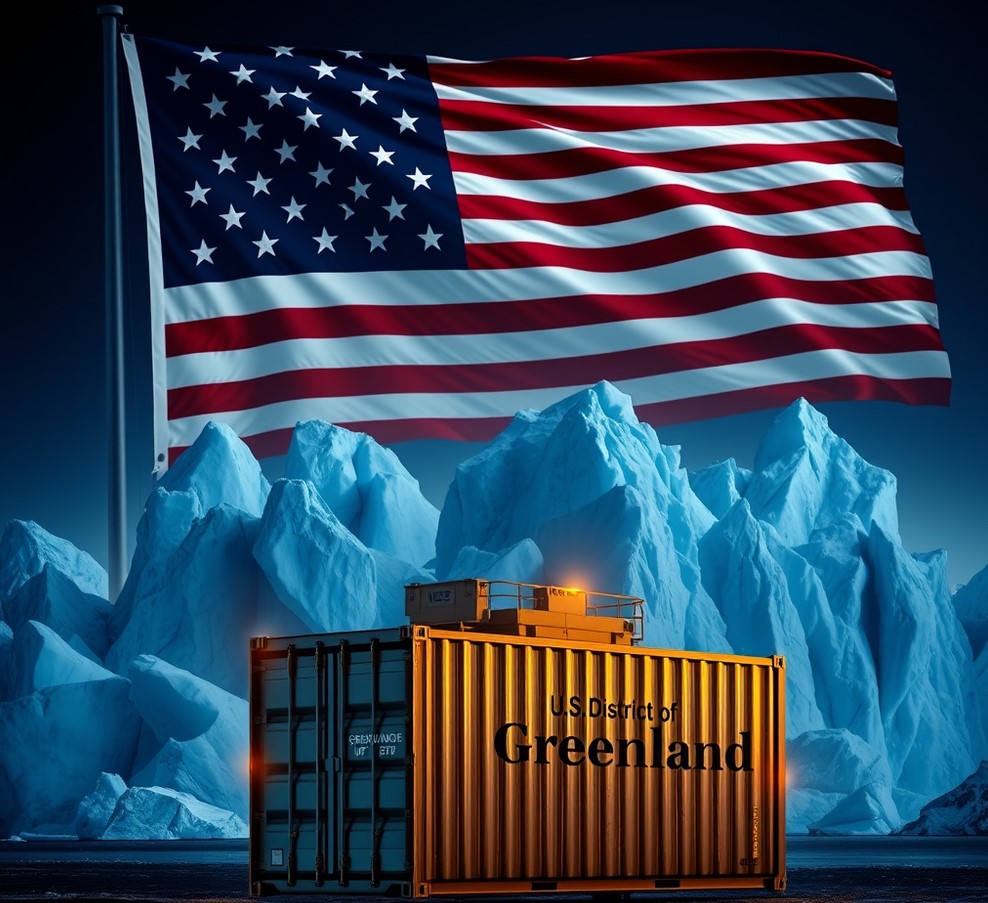
However, as we move into 2026, the geopolitical winds have shifted toward the Arctic. In a world defined by melting ice caps, rare-earth mineral scrambles, and the “Great Northern Resource Rush,” Greenland is quietly leapfrogging its way to the top of the statehood shortlist. While Puerto Rico remains entangled in a century-long identity crisis and “territorial limbo,” Greenland represents something far more persuasive to the American establishment: a strategic necessity.
The Mineral Mandate
The primary driver behind the Greenland-as-a-State movement isn’t cultural—it’s geological. As of 2026, the global race for semiconductor sovereignty and green energy components has reached a fever pitch. Greenland sits atop one of the world’s largest untapped deposits of neodymium, praseodymium, and dysprosium.
“Puerto Rico offers a vibrant culture and a strategic Caribbean foothold, but it doesn’t solve the supply chain crisis,” says Dr. Silas Thorne, a geopolitical analyst at the Arctic Security Initiative. “Greenland is essentially a massive, frozen vault of the materials required to power the 21st century. In the eyes of a resource-hungry Congress, that makes for a much more compelling ‘business case’ for statehood than the complex debt restructuring of San Juan.”
The “Unincorporated” Trap
Puerto Rico’s path to statehood has been blocked by a unique brand of American bureaucratic inertia. Despite multiple plebiscites, the island remains an unincorporated territory—a status that allows the U.S. to maintain control while denying the full benefits (and representation) of statehood.
“The political cost of Puerto Rican statehood is seen as too high for many in D.C. because it would fundamentally shift the balance of the Senate,” notes Julian Sterling, an investigative correspondent for the Global Ledger. “Greenland, conversely, is viewed as a blank slate. Its population is small—roughly 56,000—meaning it offers the strategic advantage of two Senators and a massive landmass without the ‘threat’ of a large, culturally distinct voting bloc that might disrupt the current two-party stalemate.”
The Denmark-U.S. Pivot
Since the 2019 proposal to “buy” Greenland was laughed out of the headlines, the dialogue has matured into a sophisticated partnership. In 2026, the “Joint Sovereignty Agreement” between Copenhagen and Washington has created a framework where Greenland enjoys increased autonomy from Denmark while becoming economically tethered to the U.S.
With China’s “Polar Silk Road” expanding, the U.S. military has transformed Thule Air Base (now Pituffik Space Base) into a primary defense hub. The transition from “Strategic Partner” to “51st State” is now seen by many in the Pentagon as the only way to permanently “lock the front door” of the Arctic.
Conclusion: The Cold Reality
While Puerto Rico continues to fight for its seat at the table through the slow, grinding machinery of civil rights and historical redress, Greenland is being beckoned toward the table by the urgent demands of national security and economic survival. In 2026, it seems the 51st star won’t be born from a Caribbean sun, but from the shimmering Aurora Borealis.
 Real.Good.News.
Leave a comment