By Julian Sterling, Lead Investigative Correspondent
January 19, 2026
As we navigate the first weeks of 2026, a strange mood has settled over our digital feeds. We aren’t just looking back at 2016 for comfort; we are reaching further into the past, specifically to a decade that tried to warn us about the very world we currently inhabit. The “Retro Reset” of 2026 has turned the 1980s from a punchline into a sanctuary.
There is a paradoxical comfort in the way the 1980s imagined the end of the world. Compared to the invisible, algorithmic, and hyper-efficient anxieties of today, the dystopias of forty years ago feel, well, cozy. Here are ten reasons why we are nostalgic for a future that was supposed to be a nightmare.
1. The “Texture” of the Apocalypse
Today’s technology is sleek, silent, and terrifyingly efficient. In the ’80s, the “future” was made of grit, smoke, and mechanical clatter. Whether it was the rain-slicked streets of Blade Runner or the clunky interfaces of WarGames, the dystopia had a tactile reality. It felt lived-in. In 2026, we are trading our digital perfection for “purposeful lens flares” and grainy video pixels just to feel that texture again.
2. Antagonists You Could Actually See
Modern oppression is decentralized and often invisible—an algorithm that suppresses your post or a predatory data audit. In ’80s media, the enemy was usually a monolithic state or a clearly labeled megacorporation with a neon logo. There was a strange comfort in having a villain you could point at, rather than a ghost in the machine that quietly gaslights your reality.
3. The Analog Resistance
The 2026 “Analog Movement” is a direct homage to the heroes of ’80s sci-fi who used physical tools to fight high-tech systems. We miss the era when a cassette tape or a floppy disk was the key to saving the world. Today, as we “go analog” to counter-balance screen-dominated lives, we are cosplaying as the very rebels the 1980s predicted.
4. Predictable Nightmares
Dystopian fiction used to be a warning; now it feels like a prophecy. The “Armageddon Scenarios” of the ’80s were terrifying, but they were also stories with narrative closure. We miss when the end of the world was an hour-long movie we could walk away from, rather than a slow-burn reality we are currently living through.
5. Unbridled Optimism in the Face of Doom
Even at its darkest, ’80s media was infused with a spirit of inventiveness and imagination. There was a sense that a group of kids on bicycles—the “Amblin formula”—could take on the government and win. In 2026, we long for that specific brand of “suburban fantastic” heroism where the status quo could actually be improved by daring.
6. The Privacy of Disconnection
In an ’80s dystopia, you could still go “off the grid” just by walking into a forest or a basement. Today, our 2026 biometric ledgers and smartwatches track our pulse in real-time. We miss the “cozy” feeling of being lost in a world where the only way to find someone was to actually go looking for them.
7. Neon as a Mood Stabilizer
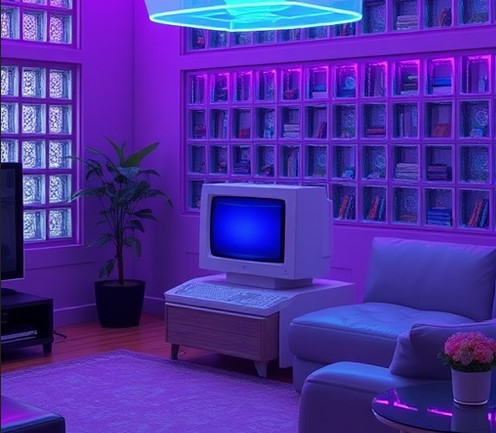
There is a reason “vaporwave” and “synthwave” aesthetics are peaking in 2026. The vibrant neon pinks and electric blues of ’80s futurism are a direct antidote to the “minimalist beige” that has dominated the 2020s. We are reclaiming the “bold, chaotic charm” of the past to brighten a present that feels increasingly sterile.
8. The Competence of the Underdog
’80s heroes were often characterized by “competence”—they knew how to fix an engine, bypass a circuit, or use a ham radio. As we rediscover “analog hobbies” like needlepoint and woodworking in 2026, we are chasing the confidence that comes from physical skill, a hallmark of the ’80s protagonist.
9. Shared Cultural Touchstones
Before the “algorithmic fracturing” of the 2020s, media was a shared experience. Everyone watched the same blockbuster on a Friday night. We miss the collective “coziness” of a world where we all shared the same fears and the same favorite songs, rather than living in individual, AI-curated bubbles.
10. The Hope of the “New”
In the 1980s, the future was still a vibrant entity “just around the corner”. Even the dystopian visions were fueled by a belief in progress. In 2026, we feel the “future is canceled,” leading us to remix the entire archive of the past to construct our identities. We miss the ’80s most of all because it was the last time we were truly excited to see what happened next.
 Real.Good.News.
Leave a comment