By Avery Finch, Senior Tech & Lifestyle Editor
January 19, 2026
In the age of 2026 “Retro-Resets” and DIY hacks, there is a growing trend of people looking for “accessible” pleasure tools in their own cabinets. However, when it comes to anal exploration—colloquially known as “butt stuff”—the stakes for a DIY disaster are significantly higher than a failed sourdough starter. The anatomy of the rectum is uniquely unforgiving; unlike the vaginal canal, it does not have a “stop sign” like the cervix, leading instead directly into the colon.
While the internet is full of “advice” on using household objects, emergency room data from the last decade reveals a sobering reality: nearly 18% of rectal foreign body removals involve glass objects like light bulbs or drinking glasses, while the largest category is a grab bag of kitchen gadgets, tools, and personal care bottles. Before you reach for anything that wasn’t designed for the task, here is the clinical reality of the most commonly suggested household “alternatives.”
The False Comfort of the Produce Drawer
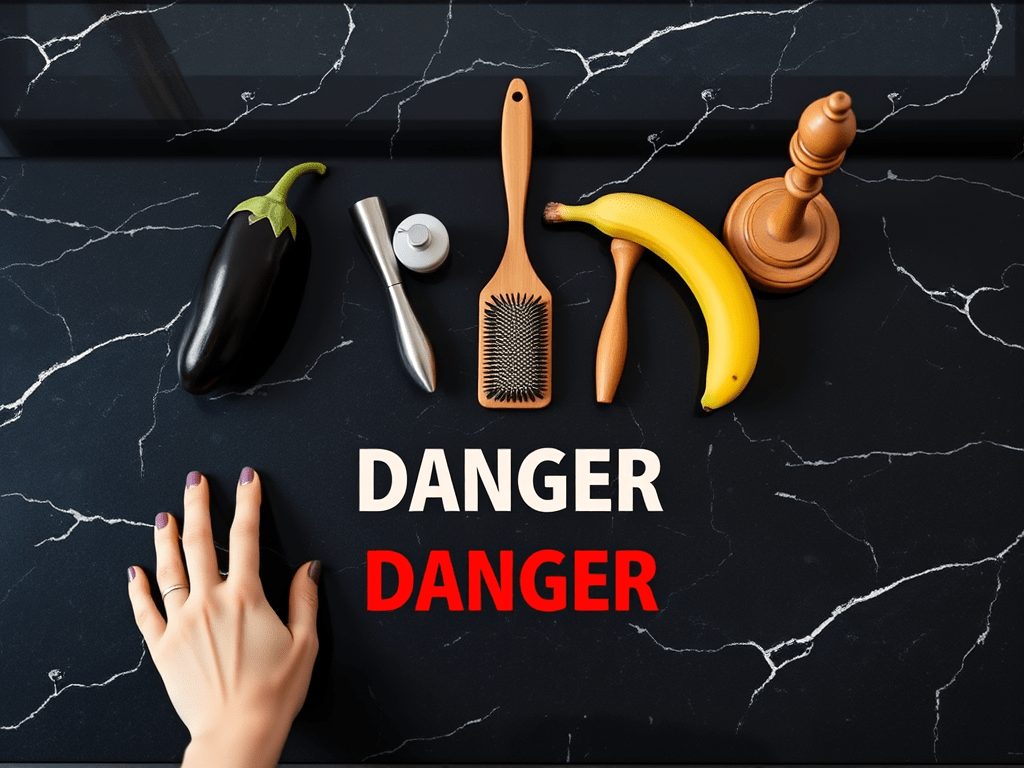
Fruits and vegetables like cucumbers, carrots, and bananas are frequently cited as “beginner-friendly” dildos. Proponents suggest using a condom for safety, but these organic items carry severe risks. They are often porous, meaning they can harbor bacteria even after a quick rinse, and they lack the structural integrity required for internal contractions. More importantly, they lack a flared base—the non-negotiable safety feature that prevents an object from being unintentionally pulled into the body by natural sphincter contractions.
The “Shower-Slippery” Bottles
Shampoo, conditioner, and condiment bottles are among the most common items recovered in ER visits. The danger here is twofold: the materials are often rigid plastic that can leach chemicals or crack under pressure, and the shapes are typically tapered in a way that makes them easy to insert but nearly impossible to retrieve once they pass the sphincter. In 2026, medical professionals are still seeing “the shower slip-and-fall” as the primary excuse for these avoidable medical emergencies.
The Bathroom Counter: Hairbrushes and Toothbrushes
Hairbrush handles are often lauded for their “flared” brush end, but they are not designed for internal use. Most are made of porous materials or contain seams and textures that can cause micro-tears in the delicate rectal lining. Similarly, the handles of electric toothbrushes are occasionally used for external vibration, but should never be inserted. The vibrations can mask the pain of a tear or perforation until it becomes a surgical emergency.
A Safer Path for 2026
If you are curious about anal play, the consensus for 2026 is clear: do not use household items. The safest way to explore is using your fingers (with trimmed nails) or professionally manufactured toys made from non-porous materials like medical-grade silicone, borosilicate glass (Pyrex), or stainless steel. Any insertive toy must feature a wide, flared base to ensure it remains retrievable.
 Real.Good.News.
Leave a comment