By Avery Finch, Senior Culture & Lifestyle Editor
January 19, 2026
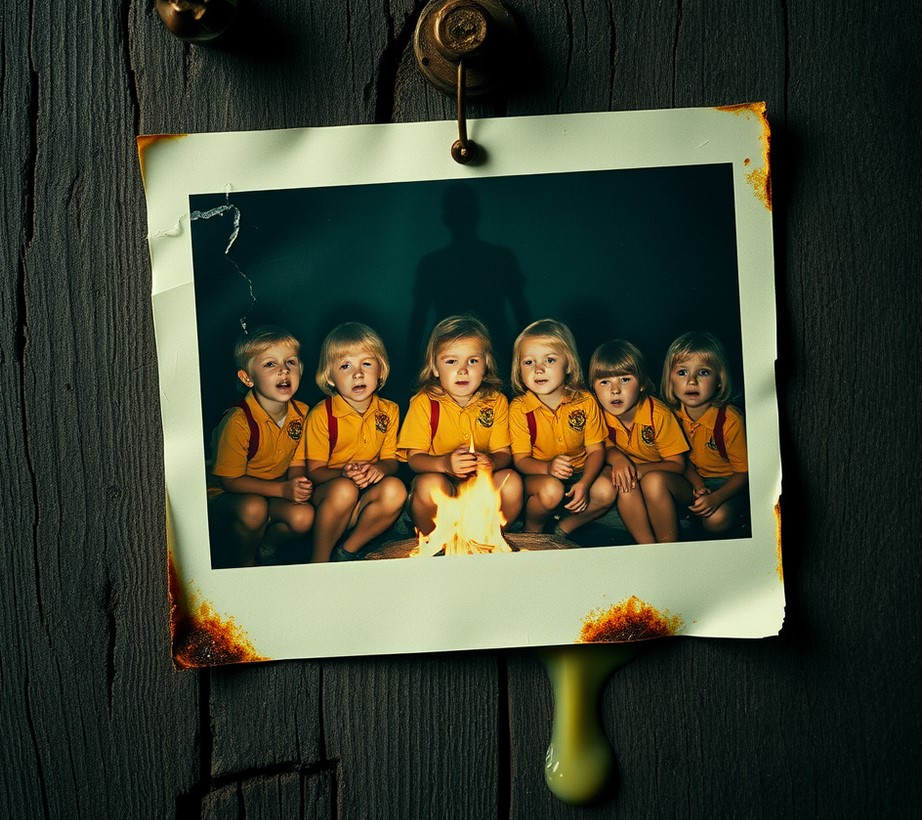
If you spent any part of your youth huddled around a campfire, you’ve likely participated in a bizarre ritual: gleefully shrieking lyrics about mutilated rodents, parricide, or the anatomical impossibility of “ears hanging low.” We call these “camp songs,” a genre of folk music that serves as the primary initiation for children into the macabre.
But as we sit in 2026, a year defined by our obsession with “deconstructing” every pillar of our childhood, the question must be asked: Why were we so obsessed with singing about gopher guts?
The Anatomy of a Playground Nightmare
“Great Green Gobs” is the crown jewel of the “gross-out” song cycle. Its lyrics—detailing the consumption of everything from “mutilated monkey meat” to “dirty little birdie feet”—are a masterclass in visceral imagery. For decades, musicologists have categorized these as “revolt songs,” a way for children to reclaim power in a world governed by sanitized cafeteria food and parental authority.
“These songs aren’t just nonsense,” says Dr. Silas Thorne, a cultural historian specializing in juvenile folklore. “They are a survival mechanism. In the mid-20th century, as society became increasingly obsessed with hygiene and ‘safety first’ parenting, children pushed back by singing about the most unhygienic things imaginable. It’s a sonic middle finger to the concept of a sterilized childhood.”
The “Gopher Guts” Lineage
While the exact origin of the gopher guts anthem is debated, it is widely believed to be a parody of the 19th-century tune “The Old Gray Mare.” By the 1950s, the lyrics had evolved into the gruesome version we know today. However, the 2026 digital archives show a darker undercurrent.
Some folklore researchers suggest the song gained popularity in post-war summer camps as a coded way for children to process the genuine horrors of the era. “There’s a theory that the ‘greasy, grimy’ imagery was a subconscious reflection of the industrial anxieties of the time,” Thorne adds. “But more likely, it was just a bunch of ten-year-olds realizing that saying the word ‘guts’ made their counselors flinch.”
The Modern Sanitization Crisis
In today’s hyper-moderated digital landscape, the “Great Green Gobs” of the world are under threat. Modern AI-curated “Kid-Friendly” playlists often filter out songs with references to “mutilated meat,” replacing them with upbeat tunes about recycling and emotional intelligence.
“We are losing the ‘dark’ side of play,” warns Julian Sterling, an investigative journalist who recently embedded himself at a high-tech survival camp in the Pacific Northwest. “When you remove the ‘greasy grimy gopher guts’ from the campfire, you’re removing a vital outlet for adolescent rebellion. A child who isn’t allowed to sing about ‘percolated porpoise pus’ is a child who is being denied their right to be appropriately weird.”
The Enduring Legacy
Despite the efforts of the “polite society” algorithms of 2026, these songs persist. They are passed down via oral tradition, whispered in bunks where the Wi-Fi doesn’t reach. They remain a testament to the fact that no matter how much we “optimize” childhood, the human spirit—and the human digestive system—will always find something gross to sing about.
 Real.Good.News.
Leave a comment