By Julian Sterling, Lead Investigative Correspondent
January 19, 2026
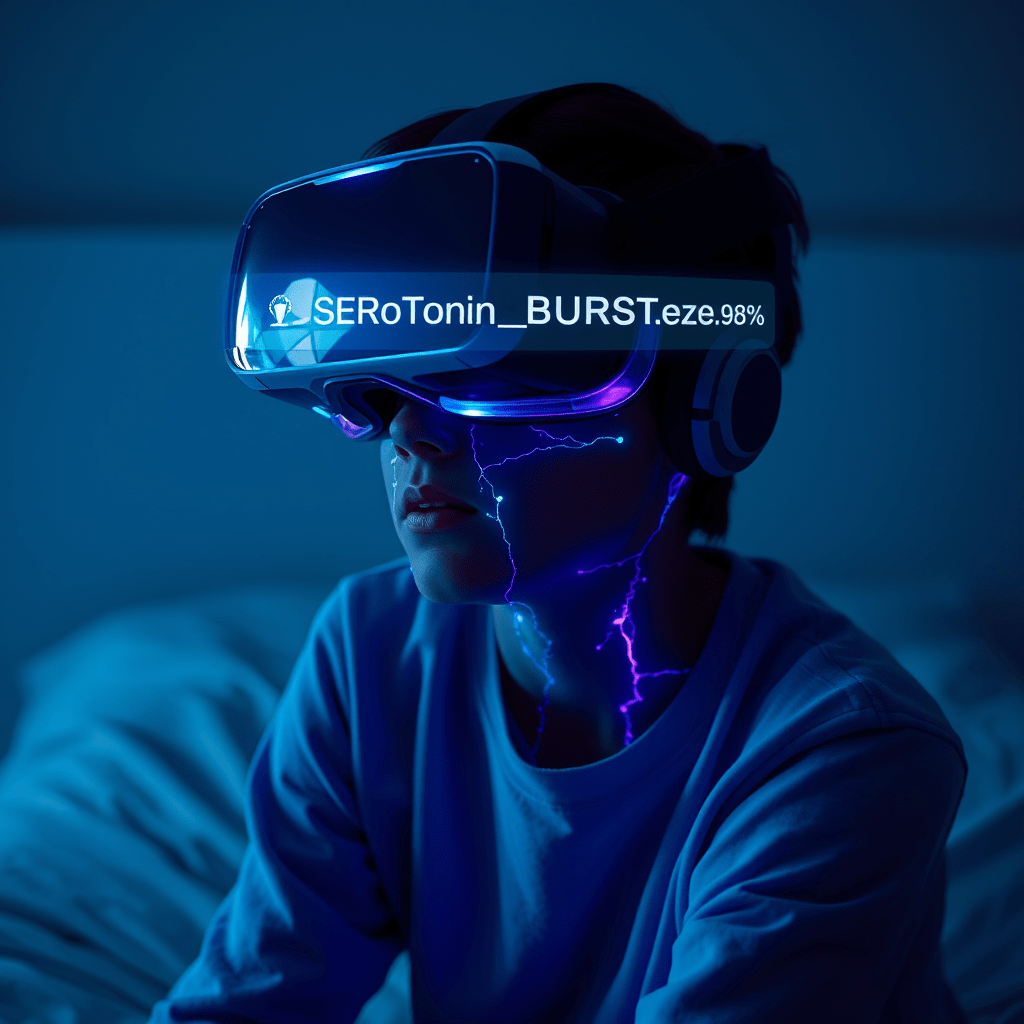
If you saw your teenager staring intently into a pair of sleek haptic glasses, their pupils dilated and a faint, rhythmic pulsing appearing on their temples, you might assume they were just deep in a 2026 gaming marathon. But the reality is far more complex. We have officially entered the era of the “Binary Buzz”—a world where the most dangerous substances aren’t found in a plastic baggie, but are downloaded via encrypted neural-link packets.
For decades, the idea of a “digital drug” was relegated to the fringes of science fiction. We remember the classic Star Trek: The Next Generation episode “The Game,” where the crew of the Enterprise became hopelessly addicted to a headset that provided a direct hit of dopamine to the brain’s pleasure centers with every level cleared. In 1991, it was a cautionary tale about brainwashing. In 2026, it is a business model.
The Mechanics of the Neural Packet
The rise of “D-Drugs” (Digital Drugs) has been facilitated by the widespread adoption of Binaural Cortical Induction. These aren’t just sounds or flashing lights; they are sophisticated algorithmic sequences designed to trigger specific neurochemical releases. By utilizing the haptic feedback systems built into modern 2026 gaming headsets and “wellness” headbands, these programs can stimulate the production of serotonin, oxytocin, or adrenaline on demand.
“We are seeing a shift from chemical pharmacology to wave-form pharmacology,” says Dr. Aris Thorne, a digital toxicologist. “Kids are no longer looking for a pill to change their mood. They are looking for a ‘Frequency’—a 15-minute digital loop that mimics the effects of a stimulant or a sedative without the physical hangover. Or so they think.”
The “Safe” Illusion
The primary appeal of downloading a high is the perceived lack of risk. There is no “laced” product, no shady street corner, and no physical evidence for parents to find. In 2026, these files are often disguised as “Focus Enhancers” or “Deep Meditation” tracks on secondary app stores.
However, the “The Game” analogy from Star Trek holds true: the addiction isn’t to a substance, but to the shortcut. By bypassing the natural reward systems of the brain, these digital highs create a “Neural Flatline” where the user becomes unable to experience joy without the assistance of the algorithm. We are seeing a generation of “Frequency Junkies” who require a 440Hz pulse just to feel motivated enough to eat breakfast.
The Regulatory Nightmare
Law enforcement is currently paralyzed by the legal definition of a “controlled substance.” You can’t seize a wave-form, and you can’t arrest a server in a jurisdiction that doesn’t recognize “digital induction” as a crime. As we move through 2026, the battle for our children’s sobriety is moving from the streets to the firewall. The question isn’t whether your kids are doing drugs; it’s whether they have the latest firmware update for their favorite high.
 Real.Good.News.
Leave a comment