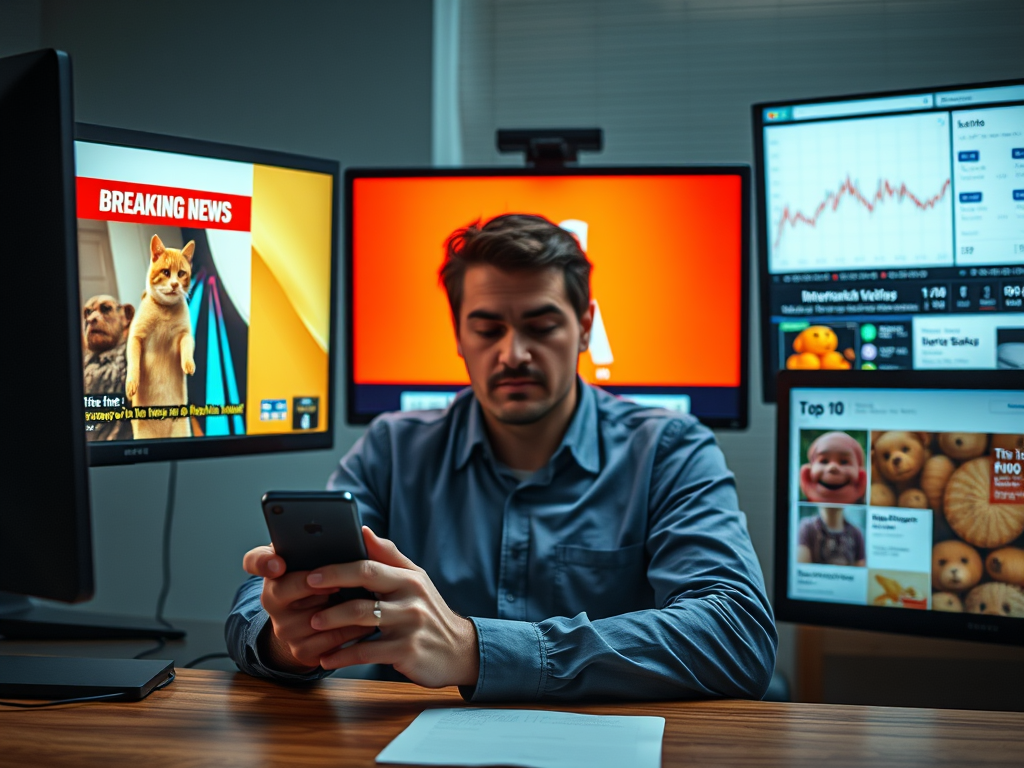
DATELINE: THE INTERNET — In a world where the 24-hour news cycle has been compressed into a 15-second vertical scroll, experts say audiences are finally achieving “peak content,” a state where information is processed exclusively through its proximity to a sponsored beverage partnership.
As we navigate early 2026, the traditional news article has undergone a “vibe shift.” Reporters no longer ask why something happened, but rather how many likes it got before being debunked by a teenager with a ring light. The rise of “AI slop”—a term for the endless tide of algorithmically generated filler—has led newsrooms to embrace “poetcore” and “gummy everything” as legitimate editorial beats.
“We found that if we put a headline like ’20 TV Shows We’ll All Be Watching in 2026,’ nobody actually reads the list,” says one anonymous social media manager. “They just argue in the comments about a show that hasn’t been cast yet. It’s about engagement, not literacy”.
Current trends suggest that 2026 is actually the “new 2016,” with users obsessively nostalgic for a time when the only “fake news” they had to worry about was whether a certain gorilla would have wanted it this way. Meanwhile, tech outlets continue to breathlessly cover CES 2026 innovations, such as “bone conduction lollipops” and “AI-powered hair clippers,” because if a gadget doesn’t look like a prop from a Black Mirror episode, it simply isn’t “news”.
 Real.Good.News.
Leave a comment