By Julian Sterling
Lead Cultural Anthropologist and Luxury Logistics Analyst
January 17, 2026
For centuries, travel was about immersion—the smell of a foreign spice market, the texture of ancient stone, the sheer, unadulterated grit of being somewhere real. But as 2026 unfolds, the modern luxury traveler has decided that “real” is overrated, unsanitary, and frankly, a logistical nightmare.
The ultimate status symbol this year isn’t a ticket to the Maldives; it is a pristine, high-fidelity Virtual Reality “Vacation Kit.”
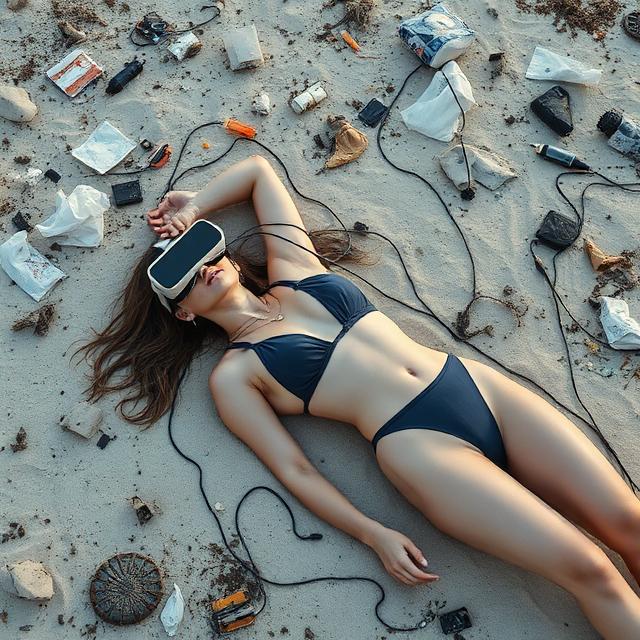
Welcome to the era of the “Staycation Simulation,” a trend where discerning travelers are paying premium rates for hyper-realistic VR modules that mimic exotic locales in the comfort of their own homes—or, as our image suggests, right outside their front door. Why battle airport security and jet lag when you can experience the Great Barrier Reef while lying on your local patch of sand?
This shift is rooted in the pursuit of the “Perfect Experience.” AI-driven travel platforms are now so sophisticated that they can generate an idealized version of any location on earth. The digital sun is always at the perfect angle, there are no crowds, and the ambient noise is tailored to your preferred “Serenity Index.” According to recent consumer trend reports, this rejection of physical perfection in favor of digital perfection is a hallmark of the year.
Critics point out the irony: you are paying thousands to actively ignore the beautiful beach you are physically occupying. They argue that this “Simulated Sunset” is the pinnacle of digital isolation. However, proponents argue it is about efficiency. “I can cycle through three continents and optimize my tan in a single afternoon,” noted one trend-setter, “You can’t do that with traditional ‘travel’.”
In 2026, we have finally achieved peak travel: the journey of the mind, safely contained within the sanitized boundaries of our personal data bubbles. The only thing you’ll bring back from this “trip” is a slightly red nose.
 Real.Good.News.
Leave a comment