By Julian Sterling
Chief Political Strategist and Predictive Behavioralist
January 17, 2026
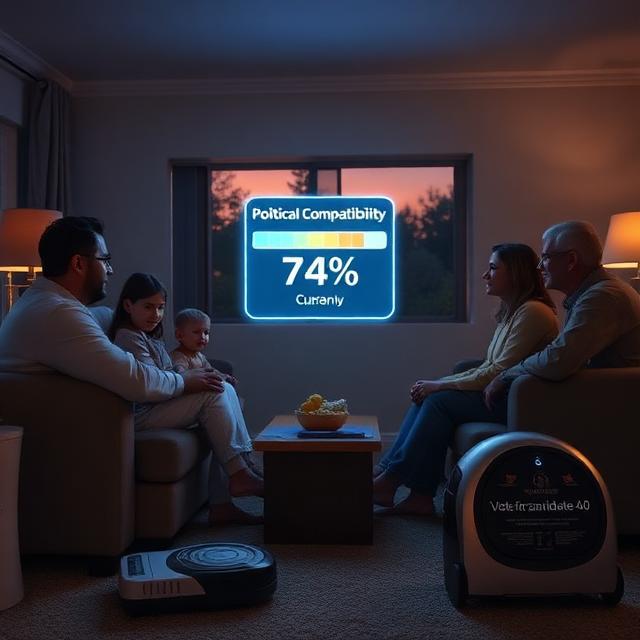
For decades, political pundits obsessed over the “swing voter”—that mythical creature in a diner in Ohio who couldn’t decide between two ideologies. As we enter the 2026 midterm cycle, the swing voter has been replaced by the “Swing Algorithm.” In the modern political landscape, we no longer ask what the people want; we ask what their smart appliances have inferred about their subconscious anxieties.
The 2026 elections mark the debut of Sentiment-Based Governance, a system where candidates no longer hold rallies to speak, but to listen—literally. Campaign staff now deploy high-fidelity “Empathy Drones” over suburban neighborhoods to measure the collective cortisol levels of the electorate. If a zip code is stressed, the candidate’s platform automatically updates to include more funding for botanical gardens and “mandatory quiet hours.”
It is a masterpiece of efficiency. Voters are finding that the rise of AI in 2026 campaigns has removed the messy business of personal conviction. Why bother forming an opinion on fiscal policy when your wearable device has already alerted the local candidate that your heart rate spikes whenever the word “inflation” is mentioned? You didn’t choose the candidate; your biometric data did.
Critics argue that this “Algorithmic Democracy” has turned the ballot box into a suggestion box for a supercomputer. However, proponents point out that voter engagement is technically at an all-time high, largely because your smart fridge won’t unlock the vegetable crisper until you’ve acknowledged the latest digital town hall notification.
As we look toward November, the message is clear: the most influential voice in the 2026 election won’t be a person, but the aggregate data of our collective, exhausted digital footprints. It’s democracy, just without the guesswork—or the free will.
 Real.Good.News.
Leave a comment