By Julian Sterling, Senior Anthropological Correspondent
January 17, 2026
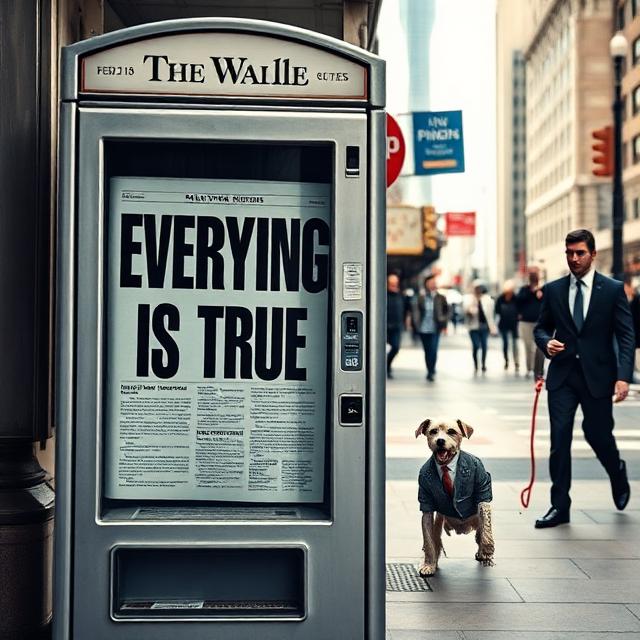
There was a time, perhaps as recently as the early 2020s, when the phrase “you can’t make this stuff up” was reserved for the occasional Florida Man headline or a particularly bizarre twist in a late-night talk show monologue. But as we navigate the factual landscape of early 2026, that phrase has transitioned from a cliché into a legitimate sociological diagnosis. We have reached a point of Cultural Velocity where reality is no longer content to merely imitate art; it is actively trying to out-weird it, leaving our professional fiction writers in a state of permanent unemployment.
The factual data points of the last week alone read like a fever dream written by a malfunctioning AI. In Dorset, Minnesota, an eighteen-month-old is currently being briefed on local zoning laws while wearing a diaper. In Washington, the President is reportedly gauging national security policy based on the “view-to-like” ratio of his dance videos. Meanwhile, across the Atlantic, the European Union is attempting to pass legislation to ban the fourth dimension. These are not the plot points of a dystopian novel; they are the lead stories on the 2026 Global News Feed.
The “Governance Gap” has become so wide that the truth has become indistinguishable from a hallucination. We are witnessing the Death of the Absurd, because for something to be absurd, it must first be impossible. In 2026, nothing is impossible. When a Miami nightclub is seriously discussed as a fair trade for 23% of the world’s largest island, the concept of “value” has officially left the building. We are living in a factual era where the most reliable way to predict the future is to think of the most ridiculous possible outcome and then wait forty-eight hours for it to be signed into law.
 Real.Good.News.
Leave a comment