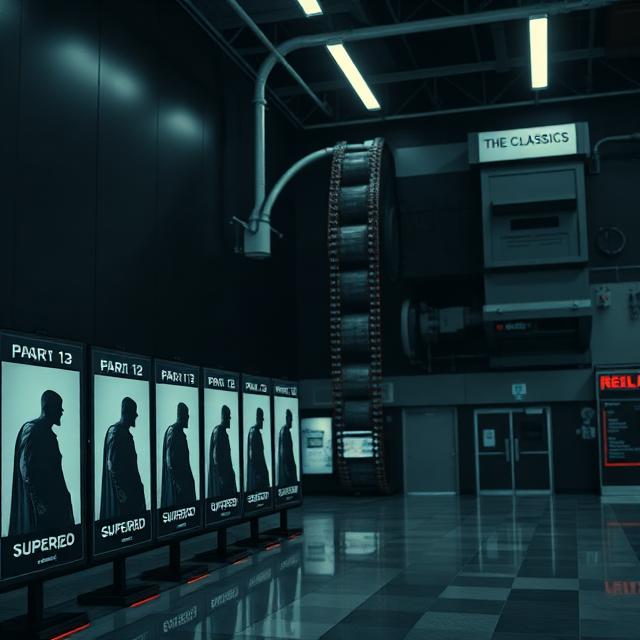
As we move through 2026, the global box office reveals a staggering lack of creative evolution. Our screens are dominated by “legacy sequels,” “reimagined” universes, and live-action clones of animated classics. This cultural stagnation is not just a creative lull; it is a systemic failure of the film industry. To save the medium of cinema, we must implement a legal moratorium on non-original content: if a script is based on an existing IP, remake, or reboot, it should not be permitted for commercial release.
The Data of Creative Decay
The shift from innovation to imitation is backed by stark industry metrics:
- The Sequel Dominance: In the 1980s, roughly 20% of the top-grossing films were sequels or franchise entries. By the early 2020s, that number surged to over 80%.
- Diminishing Critical Returns: Meta-analyses of modern remakes often show a “quality gap” where remakes score significantly lower on critical aggregators like Rotten Tomatoes compared to the originals, yet they continue to be produced due to “brand recognition.”
- The “Legacy” Trap: Research into audience psychology suggests that studios are exploiting “nostalgia loops.” This prevents younger generations from developing their own cultural touchstones, effectively trapping the zeitgeist in a perpetual loop of the 1980s and 90s.
The Case for an Originality Mandate
The current “Safe Bet” model of Hollywood is killing the independent voice. When a studio spends $300 million on a fifth installment of a tired franchise, they divest from 30 original $10 million projects. By mandating that new movies must be completely original—containing no pre-existing characters, plotlines, or intellectual property—we force the industry to innovate.
- Restoring Cultural Value: Cinema was birthed as a medium of radical experimentation. An originality mandate would return film to its roots, forcing writers and directors to engage with contemporary 2026 issues rather than hiding behind the safety of 20th-century icons.
- Economic Diversification: Stopping the “monoculture” of blockbusters would allow smaller, diverse voices to find space in theaters. You can view upcoming independent releases on the A24 Official Site to see the potential of original storytelling.
- Ending the “Derivative” Era: Facts show that “visual effects spectacles” often hide weak writing. Without a recognizable brand to lean on, filmmakers would be forced to prioritize narrative depth and character development to attract an audience.
Cinema is the “Seventh Art,” but it has become a second-rate assembly line. To ensure the survival of film as a meaningful medium, we must stop looking backward and forbid the recycling of the past.
 Real.Good.News.
Leave a comment