By Julian Sterling, Senior Anthropological Correspondent
January 17, 2026
In the early 2010s, the Paleo Diet was marketed as the ultimate return to form—a biological “reset” that promised to strip away the inflammatory sins of the Agricultural Revolution. We were told to eat like our ancestors: heavy on the bison, light on the legumes, and strictly forbidden from touching a grain of rice. However, as we stand in the mid-point of 2026, the factual data from a decade of “Ancestral Living” has begun to paint a much grimmer picture. The satirical tragedy of the modern hunter-gatherer is that while we’ve spent thousands of dollars on grass-fed ribeyes, we’ve inadvertently turned our colons into a high-risk archaeological site.
The core of the issue lies in the “Fiber Void.” Anthropologically speaking, our actual ancestors weren’t just eating lean meats; they were consuming upwards of 100 grams of fibrous tubers and wild plants daily. The modern Paleo Enthusiast, however, has largely interpreted “caveman” as “person who eats three pounds of bacon and calls it a lifestyle.” Factual reports from the Global Health Initiative 2026 suggest that this chronic lack of fermentable fiber is causing a mass extinction event within the human microbiome. Without fiber to feed the “good” bacteria, the gut lining begins to thin, leading to the systemic inflammation that serves as the primary gateway for Colorectal Cancer.
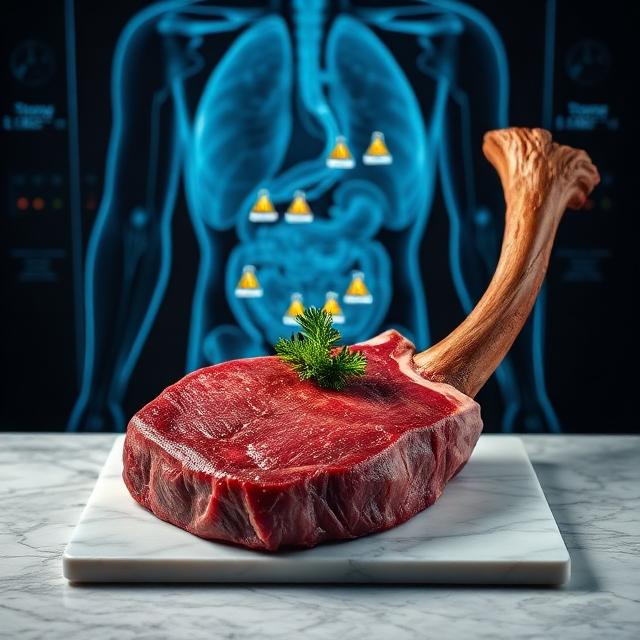
Furthermore, the 2026 surge in early-onset colon cancer among “Health Influencers” highlights the danger of excessive heme iron and heterocyclic amines—the chemicals formed when we char our meats to achieve that “primal” crust. We have reached a point of Nutritional Satire where individuals are avoiding a slice of whole-grain bread as if it were poison, while simultaneously subjecting their digestive tracts to a daily barrage of processed red meats that the World Health Organization categorized as carcinogenic years ago. We are literally starving our gut of the very grains that provided the “internal scrubbing” necessary to keep cellular mutations at bay.
The factual reality is that evolution didn’t design us to live forever; it designed us to live just long enough to reproduce. By mimicking the diet of a 25-year-old Pleistocene hunter who likely died of a tooth infection, we are ignoring the modern reality of longevity. In 2026, the most “evolved” thing you can do for your health isn’t to buy a side of beef and a spear; it’s to admit that the humble, “un-Paleo” lentil is probably the only thing standing between you and a very unpleasant conversation with an oncologist.
 Real.Good.News.
Leave a comment