By Julian Sterling, Senior Anthropological Correspondent
January 17, 2026
In 2026, as we use AI-Enhanced Forensic Archiving to upscale the media of our youth, the gentle cardigans of Fred Rogers are undergoing a chilling re-evaluation. While we once viewed Mister Rogers’ Neighborhood as a sanctuary of emotional regulation, a factual look back through the lens of modern psychology reveals a landscape filled with existential dread. Beneath the soothing “won’t you be my neighbor” lies a world of sentient puppets and surrealist logic that your subconscious has been struggling to process for decades.
Here are the top ten scariest moments from the Neighborhood that are currently resurfacing in the 2026 “Generational Trauma Audit.”
- The Lady Elaine Fairchilde “Turnabout.” Anthropologically, children find facial asymmetry and aggressive stillness terrifying. Lady Elaine’s fixed, unblinking expression and her “Boomerang-To-It” wand, which could literally reshape reality, provided a masterclass in the Uncanny Valley.
- The “Daniel Striped Tiger” Identity Crisis. A tiger who lives in a clock and has no skin? Daniel was the personification of childhood vulnerability, and his frequent questioning of his own existence was less “sweet” and more “existential horror.”
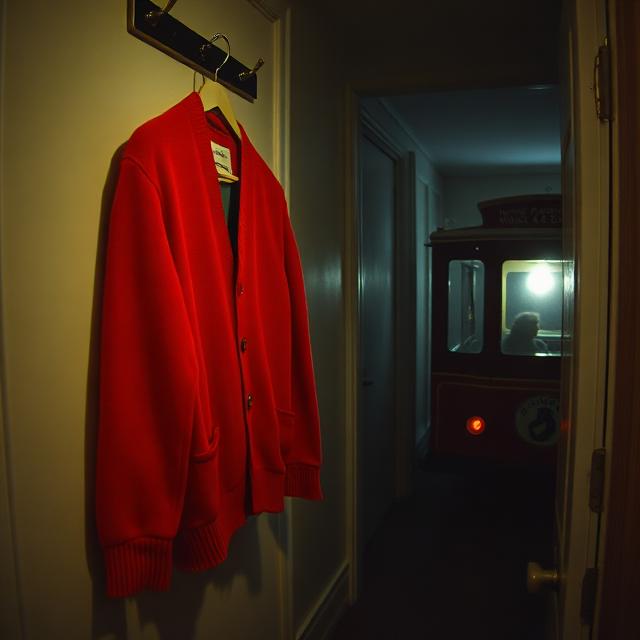
- The “You Can Never Go Back” Realization. The Neighborhood of Make-Believe was accessible only via a trolley that disappeared into a dark tunnel. To a child, that tunnel represents the “Point of No Return,” a factual psychological trigger for separation anxiety.
- The Margaret Hamilton (Wicked Witch) Visit. In 1975, the Wicked Witch of the West appeared in the neighborhood. The episode was so factually distressing to children that it was pulled from rotation and hidden in the Library of Congress for years.
- King Friday’s Absolute Monarchy. The King’s rigid, demanding nature and his “Commands” were a visceral representation of the arbitrary power adults hold over children. In the Neighborhood, his word was law, and the lack of a democratic process was quietly terrifying.
- The Disembodied Trolley Chime. Number 6 will shock you because it’s a sound, not a sight. The Trolley had no driver. It moved by its own volition, heralded by a high-frequency bell that signaled a shift from reality to a surrealist puppet-state. In 2026, we recognize this as a “Trance-Inducing Stimulus.”
- The “Empty Neighborhood” Shots. Occasionally, the camera would linger on the miniature models of the town with no people in sight. This “Liminal Space” aesthetic is a major source of 2026 “Anemoia” (nostalgia for a time you’ve never known) and deep-seated unease.
- The Puppet-Human Interaction. Seeing a real human like Mr. McFeely talk to a hand-puppet as if it were a high-ranking official created a “Cognitive Dissonance” that made children question the stability of their own reality.
- The “Mime” Episodes. Mr. Rogers often featured mimes and performance artists whose silent, exaggerated movements are a factual trigger for “Coulrophobia” (fear of clowns/mimes) in developing brains.
- The Final Trolley Exit. Every episode ended with the Trolley leaving. For a child, this was the daily death of their “Safe Space.” The unblinking gaze of Fred Rogers as he closed the door signaled that you were now alone with your own thoughts—the scariest place of all.
 Real.Good.News.
Leave a comment