By Avery Finch
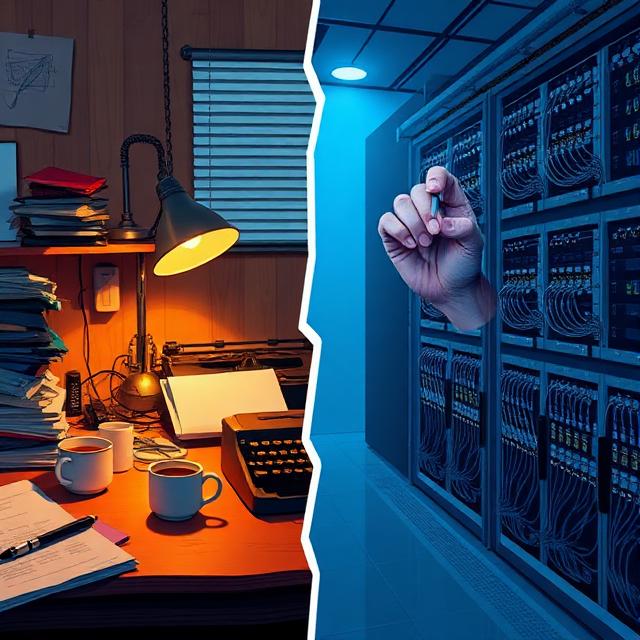
It happened. As of January 2026, we’ve officially reached the point where the average reader can’t tell the difference between a heartfelt memoir about overcoming childhood trauma and a series of statistical probabilities generated by an LLM in a windowless room in Des Moines.
Welcome to the 2026 Writing Revolution, where “writer’s block” has been cured by a “Generate” button, and my job security is currently ranked somewhere between “VCR Repairman” and “Professional Polaroid Shaker”.
The Great Prose Homogenization
According to the latest industry hand-wringing—mostly from the Authors Guild—human authorship is facing a “survival-level threat”. And why wouldn’t it? By early 2026, AI has been trained on so much of our collective output that it doesn’t just mimic our style; it optimizes it for the attention spans of people who find three-minute TikToks “a bit of a commitment”.
The result is a literary landscape that feels like a lukewarm cup of instant coffee: consistent, predictable, and remarkably devoid of the “emotional core” that makes you want to throw a book across the room in a fit of passion. We are entering the era of “Handcrafted Writing” as a luxury good, similar to pourover coffee or artisanal soap.
The “Authenticity” Tax
In a move that surprised absolutely no one, 2026 has seen a surge in “Human-Only” certifications. Some digital platforms are now experimenting with biometric typing trackers to prove that a real person actually hit the keys.
If you want to read something that “breathes and bleeds,” you’re going to have to pay the Humanity Premium. Otherwise, you’re stuck with the algorithmic comfort zone—perfectly structured, grammatically flawless, and about as soulful as a Terms of Service agreement.
How to Spot a Bot in 2026
If you suspect your favorite columnist has been replaced by a script, look for these telltale signs:
- Zero Typos: Real humans are “emotionally a disaster” and occasionally hit the ‘m’ key instead of the comma.
- Suspicously High Output: If an author is publishing three “deeply personal” essays a day while simultaneously managing a 16-bird aviary, they’re either on high-grade stimulants or using a hybrid AI workflow.
- The “Hallucination” Hook: If the article mentions that the 1980 “Miracle on Ice” team won their gold medal using enchanted hockey sticks, you’ve hit a server-side glitch.
The Avery Finch Survival Guide
- Embrace the Grunt Work: Use AI for the boring stuff, like research or summaries, so you can focus on the “real art” (which mostly involves staring at a blank wall and questioning your life choices).
- Lean into the Flaws: Raw, flawed writing is the only thing the machines can’t replicate yet. If your prose doesn’t occasionally offend a sensor or confuse a bot, you’re already replaceable.
- Check the Fees: Keep an eye on Grammarly and other “thinking partners.” If their subscription fee starts looking like a mortgage payment, they know they’ve won.
In 2026, the real winners aren’t the machines—they’re the “augmented writers” who know how to use the ghost in the machine without letting it take the driver’s seat.
 Real.Good.News.
Leave a comment