By Julian Sterling | Staff Writer
January 17, 2026
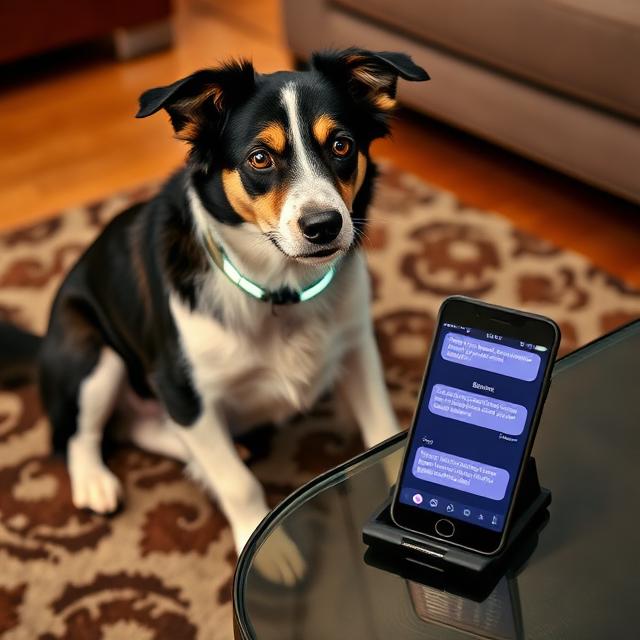
For decades, we’ve looked into the soulful eyes of our Golden Retrievers and wondered, “What is he thinking?” Thanks to the “Pet-GPT” boom of early 2026, we finally have the answer. It turns out he isn’t pondering the mystery of the universe; he just thinks your taste in podcast hosts is “aurally aggressive” and wants to know why you haven’t dropped a piece of cheese in three days.
Welcome to the era of Biometric Interspecies Translation, where the barrier between human and hound has been replaced by a $149 smart collar and a very judgmental algorithm.
From Buttons to Brainwaves
We’ve moved far beyond the “talking buttons” of the early 2020s. On January 1, 2026, tech startups like FluentPet and newcomers in the “Neural-Paw” space began shipping collars that sync heart rate, tail position, and vocal frequency to large language models.
The result? Real-time text-to-speech notifications sent directly to your phone. Your cat no longer has to knock a glass off the counter to get your attention; she can now send a push notification that reads: “The structural integrity of the kibble bowl is currently at 4%. This is an administrative failure.”
The “Total Honesty” Crisis
While the American Veterinary Medical Association (AVMA) has praised the tech for its ability to flag early signs of pet distress or pain, the social implications have been chaotic.
“I thought it would be cute,” says Sarah Jenkins, a beta tester from Seattle whose Siamese cat, Barnaby, has been using a translator since late 2025. “But Barnaby doesn’t use it for ‘love.’ He uses it to provide a running commentary on my dating life. Last night, he told my date that I ‘smell like desperation and microwave burritos.’ There wasn’t a second date.”
The Legal Paw-Print
As of January 17, 2026, the legal world is scrambling to keep up. Can a “translated” bark be used as evidence in a noise complaint? If your dog “tells” the smart collar he’s hungry, but you’ve already fed him, is that considered “digital fraud” or just a classic Beagle maneuver?
Insurance companies like Lemonade are already looking into whether “AI-Verified Pet Wellness Data” can lower premiums—or raise them if your dog’s translator reveals he’s been eating the couch cushions every time you go to the grocery store.
Julian Sterling’s Guide to AI Pet Etiquette
- Set “Do Not Disturb” Zones: Unless you want a play-by-play of your dog’s dreams at 3:00 AM, set your translator to sleep mode during human hours.
- Verify the Vibe: Remember that these are interpretations. If your dog’s collar says, “I crave the souls of the innocent,” he probably just wants a tennis ball. Check the AKC Behavioral Guide before overreacting.
- Respect the Privacy: If your cat stops “talking” when you enter the room, they are likely discussing you in a private local-network mesh. Accept your status as the house’s junior partner.
In 2026, we finally gave our pets a voice. Now, the challenge is learning how to handle the fact that they have some very strong opinions about our hair color.
 Real.Good.News.
Leave a comment