By Avery Finch
Senior Correspondent for Synthetic Life and Domesticity
January 17, 2026
For years, the goal of a great outfit was to be seen. In the age of the “main character energy,” we dressed for the lens. But as we navigate the mid-point of the decade, the most fashionable woman in the room is the one the security camera can’t quite categorize. Welcome to the “Alibi” aesthetic—the 2026 trend where high fashion meets high-stakes privacy.
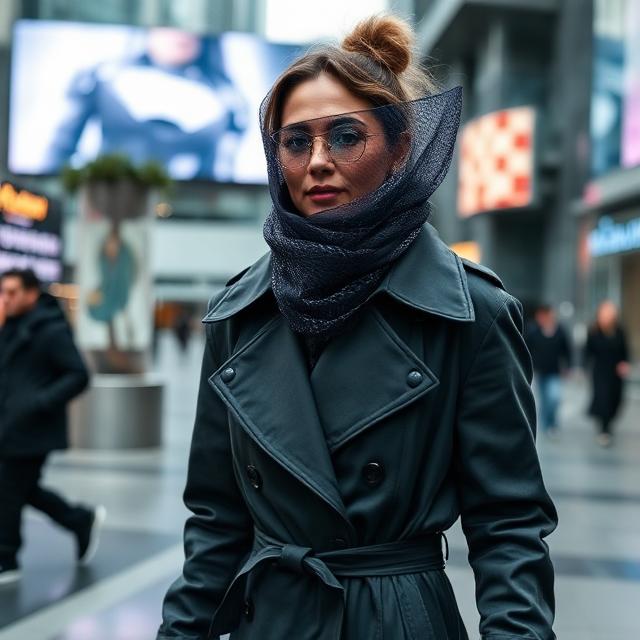
The shift is a direct response to our hyper-documented reality. With AI-integrated facial recognition now standard in most metropolitan “Smart Zones,” the 2026 silhouette has become a sophisticated game of hide-and-seek. The breakout star of the season is the “Infra-Red Veil” Scarf—a lightweight, shimmering silk accessory embedded with microscopic reflective threads that disrupt the infrared sensors of digital cameras. To the human eye, you look like a chic gallery owner in Tribeca; to the algorithm, you look like a localized heat flare.
This isn’t just “tech-wear”; it’s “Hyper-Individualism”. The 2026 runway is dominated by “Asymmetric Disruption”—coats with shoulders of varying heights and hats with brims designed to cast “unpredictable shadows.” Designers are moving away from the sleek, predictable lines of the early 2020s in favor of distorted proportions that make it impossible for a gait-analysis program to determine if you are walking to a brunch or fleeing a scene.
The irony, of course, is that to achieve this level of “invisibility,” one must spend a small fortune. These pieces are crafted from synthetic bio-fabrics that change texture based on the ambient humidity, ensuring that your “look” is never the same for more than twenty minutes. It is the ultimate luxury of 2026: the ability to exist in public without being indexed.
As we dress for the year ahead, we aren’t just choosing a color palette; we are choosing a level of encryption. In 2026, the most stylish thing you can wear is a mystery.
 Real.Good.News.
Leave a comment