By Julian Sterling, Senior Anthropological Correspondent
January 17, 2026
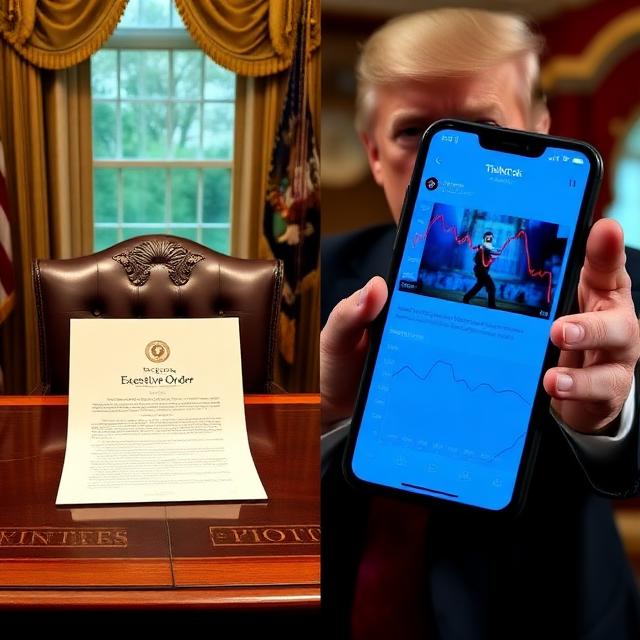
In the halls of power, policy is often guided by grand strategy, national security, or economic sovereignty. But as we navigate the mid-point of January 2026, the fate of the world’s most popular short-form video app appears to be resting on a far more fragile metric: the “Like” button. Factual reports from within the West Wing suggest that President Trump is “reconsidering” his year-long effort to save TikTok from a federal ban—not because of fresh intelligence on data privacy, but because his latest “YMCA” dance mashups have failed to crack the algorithm’s lucrative “For You” page.
Throughout 2025, Trump was the platform’s self-appointed savior, issuing five consecutive executive orders to delay the bipartisan ban. He famously brokered a multi-billion dollar deal with Oracle and MGX to spin off TikTok’s U.S. operations into a “qualified divestiture,” effectively keeping the app alive while purportedly securing American data. But the satirical tragedy of 2026 is that the “Silicon Eagle” expects a return on his investment. When a President saves an app, he expects to be its undisputed king; he does not expect to be out-performed by a teenage trendsetter doing the “Griddy” in a suburban kitchen.
The factual reality is that the TikTok Divestiture Deal is set to close on January 22, 2026. Yet, insiders claim Trump is “agitated” by the platform’s “Shadow-Banning” of his signature shimmy. Anthropologically, we are witnessing the ultimate collision of Global Policy and Influencer Ego. If the President’s engagement continues to “stagnate,” as some data suggests, the administration’s enthusiasm for the deal may evaporate. In 2026, the most dangerous thing a social media platform can do isn’t leak your data—it’s tell the most powerful man in the world that his content is “mid.”
 Real.Good.News.
Leave a comment