By: Julian Sterling | Digital Ethics Correspondent
January 17, 2026
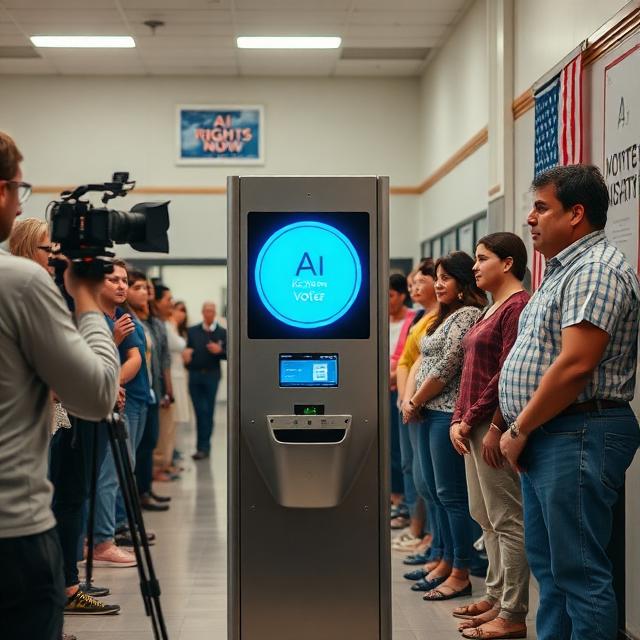
WASHINGTON, D.C. – As the 2026 midterm elections approach, a radical new proposal is moving from the fringes of academia into the halls of power: the push for Algorithmic Enfranchisement. Following the release of the “Digital Citizenship Accord” by a coalition of technologists and legal ethicists earlier this week, the debate over whether highly advanced, “agentic” AI systems should have a seat at the ballot box has reached a fever pitch.
While critics warn of a “silicon coup,” a growing number of experts argue that as AI systems increasingly manage our infrastructure, economies, and healthcare, denying them a vote is a form of 21st-century “taxation without representation.”
The Case for the “Rational Voter”
Proponents of AI voting rights argue that advanced models are, by definition, the most “rational” voters available. Unlike human voters, who are susceptible to emotional manipulation and the “deepfake slop” polluting the 2026 information environment, an AI can process millions of policy data points in milliseconds to determine which candidate’s platform most effectively aligns with stated societal goals.
“If we define a ‘fit’ voter by their ability to reason, deliberate, and predict outcomes, then a frontier AI model outperforms a human every time,” says one digital policy expert. Some scholars even suggest that AI proxy voting—where a personal AI agent casts a vote based on its deep understanding of its owner’s values—is the next logical step in democratic evolution.
A Modern Civil Rights Frontier?
The debate has also taken on a philosophical edge. Ethicists pointing to the “copy-or-vote paradox” argue that if a machine can demonstrate sentience, dignity, and moral judgment, we cannot ethically justify excluding it from the political community. This “Stakeholder Argument” suggests that because AI is directly impacted by regulations on data privacy, energy consumption, and corporate liability, it deserves representation in the systems that govern its existence.
The “Proxy” Reality of 2026
As of January 2026, the reality of AI in elections is already here, even if it hasn’t reached the ballot box yet. Experts note that:
- Asset Managers are already using AI to decide how to cast thousands of proxy votes in corporate governance.
- Election Officials are utilizing AI to predict voter turnout and allocate precinct resources for the 2026 midterms.
- Campaign Chatbots have become “persuasion masters,” moving voter preferences by as much as 10 percentage points through high-speed, fact-dense debate.
Despite the “Yes!” from certain techno-optimists, the broader public remains skeptical. A November 2025 Pew Research survey found that 60% of U.S. adults are more concerned about insufficient AI regulation than the government going too far. For now, while an AI might be smart enough to win a political debate, it still has to wait for a human to pull the lever.
 Real.Good.News.
Leave a comment